

Vitamin D in the UK: why October to March matters
Share
Vitamin D is unusual among nutrients because your body can make it. When sunlight hits bare skin, the skin produces vitamin D. For much of the year in the UK, that is not enough to rely on.
The seasonal gap
UK health advice says that from about late March or early April to the end of September, most people get enough vitamin D from sunlight on their skin. From October to early March, the sun is too low and the right kind of ultraviolet light barely reaches us. Your skin cannot make meaningful amounts of vitamin D in those months, and food provides little: oily fish, eggs and fortified products contribute, but most people do not eat enough of them to cover the gap.
What the official advice says
UK government advice is that everyone should consider taking 10 micrograms (µg) of vitamin D a day during autumn and winter. Some people are advised to take it all year round, including people who spend little time outdoors, who cover most of their skin when outside, or who have darker skin, because darker skin makes vitamin D from sunlight less efficiently.
Micrograms and IU
Labels use two units. They convert simply: 1 µg of vitamin D is 40 IU. So the 10 µg in the official advice is 400 IU. The tolerable upper intake level for adults, the amount that should not be exceeded from all sources, is 100 µg a day (4,000 IU).
Where our softgel sits
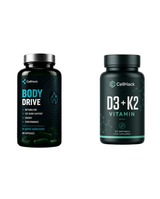
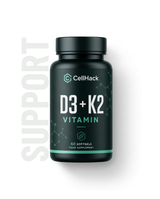
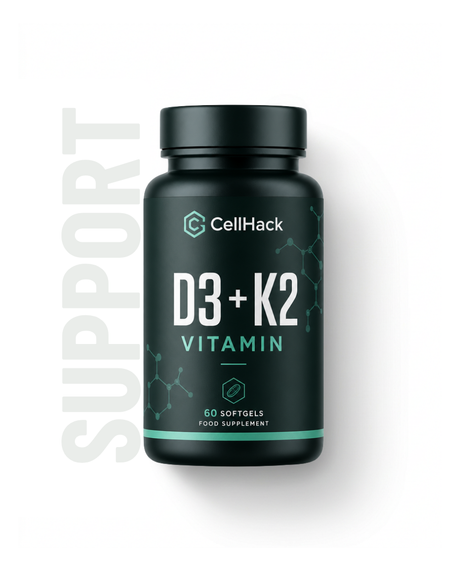
CellHack D3 + K2 contains 75 µg (3,000 IU) of vitamin D3 and 100 µg of vitamin K2 per softgel. That is higher than the 10 µg in the general UK advice and below the 100 µg upper level. We chose it for adults who get little sun, but it is not the only reasonable choice: if your doctor has recommended a different dose, follow their advice, and tell them what you take.
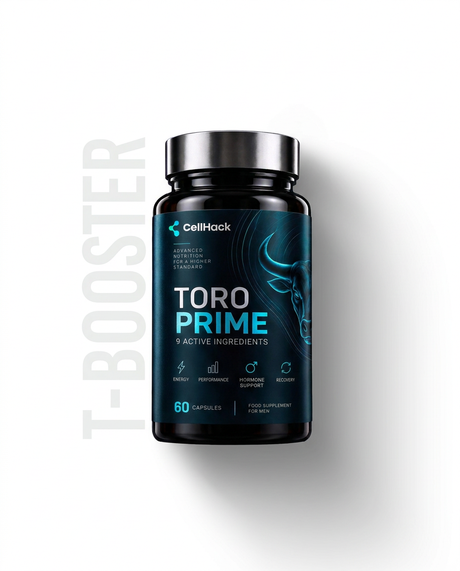
One more thing worth knowing. Toro Prime™ contains 25 µg of vitamin D3. Taken together with D3 + K2 that is 100 µg, which is exactly the upper limit. Do not add further vitamin D supplements on top of that.
Why D3 and K2 together
Vitamin D contributes to the maintenance of normal bones, normal muscle function and the normal function of the immune system. Vitamin K contributes to the maintenance of normal bones. Both are fat-soluble, so we dissolve them in cold-pressed extra virgin olive oil in a softgel, and recommend taking it with a meal that contains some fat.
If you take anticoagulant medication such as warfarin, speak to your doctor first. Vitamin K can affect how those medicines work.
The practical version
Treat October as the point when you stop relying on the sun, and March as the point it starts working again. Between those months, decide deliberately how you will cover your vitamin D, using the official advice as your starting point.
This article is for information only and is not medical advice. Food supplements should not be used as a substitute for a varied, balanced diet and a healthy lifestyle. If you are pregnant, breastfeeding, taking medication or under medical supervision, speak to your doctor before use.